Forza Horizon 6 has officially dropped players into the neon-lit streets of Tokyo and the demanding mountain passes of Japan. While many newcomers immediately spend their early progress chasing multi-million credit hypercars and headline festival vehicles, experienced players know the real competitive edge comes from overlooked machines that thrive under the new map design.
Because of this shift in meta, understanding how to efficiently manage Forza Horizon 6 Credits has become just as important as driving skill. Investing in the right base car early often yields far better returns than dumping resources into high-cost supercars that struggle in technical environments.
Below are three sleeper builds that consistently outperform expectations in both street racing and touge battles.
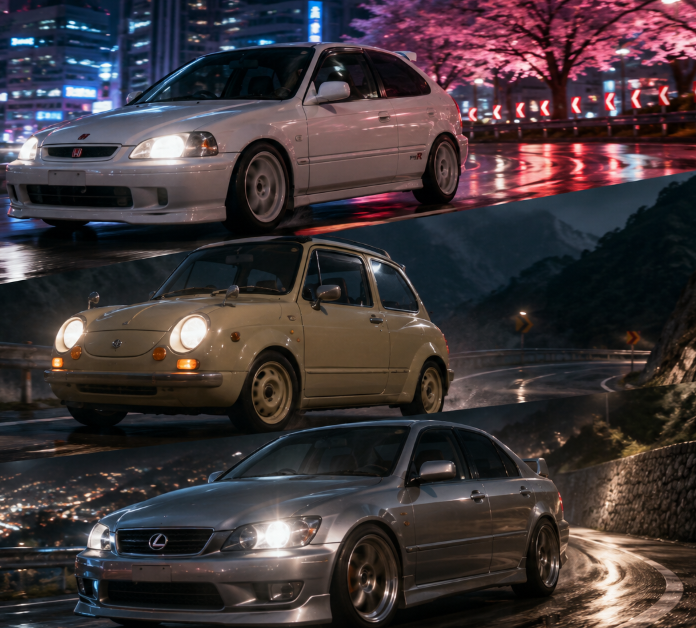
1992 Honda Civic Type R EK9 The FWD Giant Killer
On paper, the EK9 looks like a simple compact hatchback from the 90s. In practice, it becomes one of the most efficient cornering machines in the game’s B and A class environments.
The key lies in weight reduction and responsive handling upgrades. By retaining the high-revving original engine and focusing on suspension tuning, race differential setup, and lightweight components, the EK9 transforms into a precision tool for tight mountain roads.
Its low mass allows it to maintain corner speed where heavier AWD builds lose momentum. On narrow touge sections, this translates directly into consistent time advantages through sustained apex control.
1987 Nissan Be-1 The Micro Machine Advantage
The Be-1 is one of the most deceptive vehicles in the entire roster. Its compact size and unusual design make it look like a novelty rather than a serious racing platform, but its performance potential tells a very different story.
With an engine swap and drivetrain conversion, it becomes a highly customizable platform capable of competing far above its original class. Whether tuned for RWD drift control or AWD grip stability, it maintains a major advantage in tight environments due to its extremely small footprint.
In crowded Tokyo street circuits, this allows it to take unconventional racing lines that larger supercars physically cannot access. The result is consistent position gains in technical sections where precision matters more than horsepower.
2002 Lexus IS300 Toyota Altezza The Balanced Sleeper
The IS300, also known as the Altezza, represents the perfect balance between stability and hidden power potential. Under its understated exterior lies the legendary 2JZ engine platform, widely recognized for its tuning ceiling.
By adding forced induction upgrades and optimizing gear ratios for mid-range acceleration, the IS300 becomes a versatile competitor across multiple race types. It performs especially well in highway loops and mixed terrain circuits where both stability and acceleration bursts are required.
Its chassis balance makes it forgiving at high speeds while still capable of controlled drifting when entering tighter sections, giving it adaptability that many specialized builds lack.
In Forza Horizon 6 Credits management terms, the IS300 is also one of the most cost-effective long-term investments, offering competitive performance without requiring excessive spending.
In Forza Horizon 6, success is not defined by the most expensive garage, but by how effectively each build is optimized for the environment. Sleeper cars like the EK9, Be-1, and IS300 consistently outperform their reputation, especially on Japan’s demanding touge routes.